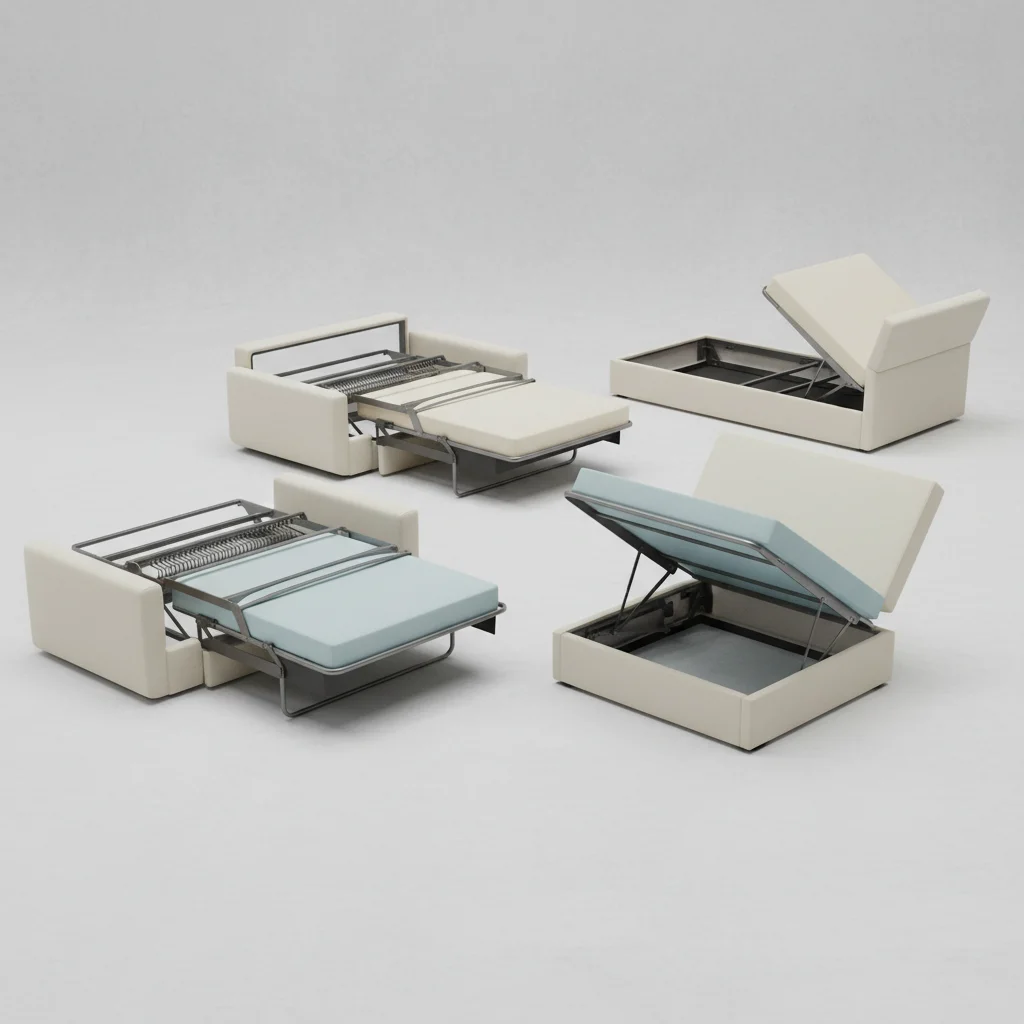
When choosing a sleeper sofa, the mechanism that transforms it from a sofa to a bed is a critical factor for ease of use. There are typically three main types of sleeper sofa mechanisms: pull-out, click-clack, and futon. Each offers a different level of convenience and effort required for conversion, with pull-out mechanisms generally considered the easiest for daily use due to their smooth operation and integrated mattress.
Understanding Pull-Out Sleeper Sofa Mechanisms
Pull-out sleeper sofas are the most common type and often the easiest to operate. These mechanisms involve pulling a hidden mattress frame out from under the sofa cushions. Modern designs frequently incorporate a smooth, assisted-lift system that makes the transition almost effortless. The mattress is usually folded within the frame, and once extended, it provides a traditional bed-like sleeping surface. This design is ideal for those who anticipate frequent conversions, as it minimizes physical strain and offers a more comfortable sleeping experience due to the thicker mattress.
Many high-quality pull-out mechanisms feature durable metal frames and robust springs, ensuring longevity and consistent performance. Look for models with a clear, intuitive handle or strap for pulling the mechanism forward. Some even include a locking feature to keep the bed securely in place once extended.
Exploring Click-Clack Sleeper Sofa Mechanisms
Click-clack mechanisms are known for their simplicity and compact design, making them popular for smaller spaces. To convert a click-clack sofa, you typically push the backrest forward until it ‘clicks’ and then lay it flat. The seat and backrest then form the sleeping surface. While straightforward, some users find the initial push and the subsequent flattening can require a bit of effort, especially with heavier models. The sleeping surface is often firmer than a pull-out, as it’s made from the sofa’s cushions.
The main advantage of click-clack sofas is their minimal footprint and often more contemporary aesthetic. They are excellent for occasional guest use or in multi-functional rooms where space is at a premium. However, for daily sleeping, the firmness and the seam between the seat and back can be less comfortable than a dedicated mattress.
Evaluating Futon Sleeper Sofa Mechanisms
|
Our Picks for the Best Sleeper Sofa in 2026
As an Amazon Associate I earn from qualifying purchases.
|
||
| Num | Product | Action |
|---|---|---|
| 1 | 79" Convertible Sleeper Sofa Bed with Cylindrical Pillow, Corduroy Folding Mattress Couch with Fixed-Shape Frame, Floor Sofa Lounge Couch for Living Room Bedroom Lounge Studio (Green) |

|
| 2 | Folding Sofa Bed, Convertible Sleeper Chair with Back Support and Pillow Futon,Boneless Foldable Couch for Living Room/Guest Use/Home Office, Foldable Chair Bed for Adults, Dark Gray |
|
| 3 | COMAX Futon Sofa Bed, Convertible Folding Sofa Bed, Boneless Couch Loveseat Corduroy with Pillows, Small Foldable Floor Couch Comfy Lounge Sleeper for Living Room Bedroom, Green |
|
| 4 | Convertible Sofa Bed, Boneless Loveseat Folding Couch Bed Foldable - 3 in 1 Small Ccouch & Futon Sofa Sleeper, Corduroy Pull Out Couch with 4 Pillows for Living Room, Black |
|
| 5 | MeMoreCool Boneless Folding Sofa Bed Queen – Corduroy Convertible Futon Couch, 2-in-1 Floor Sleeper with Foam Support, Detachable Pillow & Washable Cover for Living Room, Guest Room, Apartment |
|
| 6 | MAXYOYO Folding Sofa Bed, Convertible Sleeper Chair with Pilow Foldable Matress with Back Support, Portable Fold Out Chair Bed Comfy Floor Sofa Lounge for Living Room Bedroom, Beige, Double |
|
| 7 | Oversized Boneless Loveseat, 3 Seater Pull Out Convertible Sofa Bed, 70" Gray Boneless Couch Fold Out Floor Couch Sleeper Sofa with 5 Pillows for Living Room Bedroom Lounge Small Space |
|
| 8 | Convertible Sofa Bed Queen,5-in-1 Tri-Fold Boneless Couch with Removable Armrests & Handle,Corduroy Futon Sleeper Sofa,Floor Folding Mattress Pull Out Bed for Small Space Apartment Living Room Bedroom |
|
| 9 | Loveseat Boneless Convertible Sofa Bed, Folding Floor Futon Sleeper Sofa Couch Bed- Boneless Foldable Couch, Corduroy Pull Out Sofa Bed with 2 Pillows for Living Room & Bedroom |
|
| 10 | 5-in-1 Convertible Sofa Bed,60" Boneless Couch Tri Folding Floor Mattress with Removable L-Shaped Armrests & Handle,Corduroy Futon Couch Sleeper with Pull Out Bed for Living Room Bedroom Apartment |
|
Futon mechanisms are perhaps the most basic and oldest form of convertible furniture. They typically involve a frame that allows the backrest to recline and the seat to flatten, creating a bed. The mattress on a futon is usually a single, flexible pad that folds with the frame. Converting a futon can sometimes be a bit more cumbersome than a click-clack, often requiring two hands to adjust the frame and position the mattress correctly.
Futons are generally the most budget-friendly option and offer a very casual look. They are well-suited for dorm rooms, studios, or as an extra sleeping option in a den. While they offer versatility, the comfort level for sleeping can vary greatly depending on the thickness and quality of the futon mattress.
Key Factors for Ease of Use
- Conversion Effort: Pull-out mechanisms generally require the least physical effort due to their assisted-lift systems.
- Mattress Integration: Pull-outs often have a dedicated mattress, providing a more comfortable and bed-like experience.
- Space Requirements: Click-clack and futons are more compact, but pull-outs offer a larger sleeping surface.
- Frequency of Use: For daily or frequent use, a pull-out mechanism is usually the most practical and comfortable choice.
- Durability of Components: Look for sturdy metal frames and smooth gliding parts in any mechanism to ensure long-term ease of use.
Choosing the Right Mechanism for Your Needs
Ultimately, the best sleeper sofa mechanism depends on your specific needs and how often you plan to use it as a bed. If comfort and effortless conversion are top priorities for frequent use, a pull-out mechanism is likely your best bet. For occasional guests or in very small spaces where a compact design is crucial, a click-clack or futon might be more suitable. Always test the mechanism in person if possible to gauge the ease of operation and comfort level before making a purchase.
Get our weekly buyer guide
Practical specs, not advice. Unsubscribe anytime.
