Choosing between a sleeper sofa and a futon for guest accommodation depends on specific needs, with sleeper sofas generally offering superior comfort and aesthetics for frequent guests, while futons provide better affordability and space efficiency for occasional visitors. Sleeper sofas conceal a dedicated mattress within a traditional sofa frame, providing a sleep surface comparable to a standard bed, whereas futons use a foldable mattress on a frame, converting easily from sofa to bed.
Understanding Sleeper Sofas
A sleeper sofa, also known as a sofa bed or pull-out couch, is a traditional sofa that hides a mattress within its frame. It functions as a regular seating arrangement during the day and transforms into a bed by removing cushions and unfolding an internal mattress mechanism.
Modern sleeper sofas have significantly improved in comfort, often featuring thicker mattresses like memory foam or innerspring coils, designed to rival standard beds. They are built with robust frames for durability and come in various styles, including sectional sleepers. These sofas offer a substantial and aesthetically pleasing presence, making them suitable for main living areas or dedicated guest rooms where comfort is a priority for frequent visitors. However, their enhanced comfort and design typically result in a higher price and a larger footprint, especially when extended. For expert sleeper sofas reviews on this site.
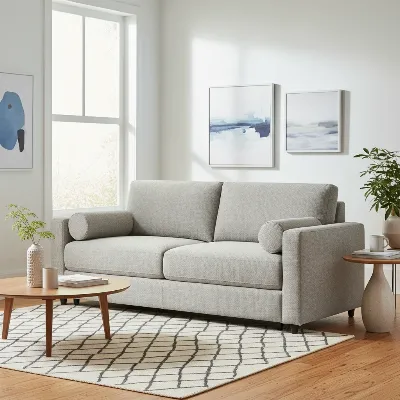 A stylish modern sleeper sofa in a contemporary living room setting, showcasing its dual function as a comfortable seating area and a discreet guest bed.
Pros of Sleeper Sofas
Sleeper sofas provide a comfortable and aesthetically pleasing solution for guests. Their primary advantage is the dedicated, often high-quality mattress (sometimes memory foam), offering superior comfort for guests staying multiple nights. They are designed to look and feel like conventional sofas, seamlessly integrating into existing decor without revealing their dual purpose. This makes them ideal for living rooms or upscale guest rooms. Their sturdy frames and durable upholstery often lead to a longer lifespan, making them a valuable long-term investment, available in sizes from twin to king.
Cons of Sleeper Sofas
Sleeper sofas have drawbacks, including a higher cost compared to futons, representing a larger initial investment. Their robust construction and integrated mattress make them heavier and bulkier, which can be challenging for frequent moving or navigating tight spaces. When converted, they require substantial floor space, limiting their use in smaller rooms. The conversion mechanism, while improved, can still be cumbersome, and some lower-quality models may have an uncomfortable metal bar beneath the mattress.
Understanding Futons
Originating from Japan as a thin mattress laid on the floor, the Western futon has evolved into a versatile sofa bed. It typically consists of a padded mattress on a foldable frame, usually wood or metal, allowing easy conversion from a sofa to a flat sleeping surface.
Western futons come in various types, including convertible sofas with integrated cushions and traditional styles with separate mattress and frame components. Mattresses vary in thickness and material, from basic cotton or foam to supportive options with pocket coils. Futons are valued for their minimalism, adaptability, and affordability, making them popular for dorm rooms, studio apartments, or spaces where budget and space-saving are crucial. They offer quick conversion and the flexibility to replace just the mattress or cover for maintenance and style updates.
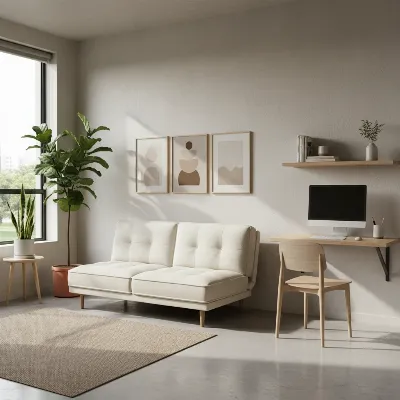 A minimalist studio apartment featuring a versatile futon in its sofa configuration, ready to be converted into a bed for guests.
Pros of Futons
|
Our Picks for the Best Sleeper Sofa in 2026
As an Amazon Associate I earn from qualifying purchases.
|
||
| Num | Product | Action |
|---|---|---|
| 1 | 79" Convertible Sleeper Sofa Bed with Cylindrical Pillow, Corduroy Folding Mattress Couch with Fixed-Shape Frame, Floor Sofa Lounge Couch for Living Room Bedroom Lounge Studio (Green) |

|
| 2 | Oversized Boneless Loveseat, 3 Seater Pull Out Convertible Sofa Bed, 70" Gray Boneless Couch Fold Out Floor Couch Sleeper Sofa with 5 Pillows for Living Room Bedroom Lounge Small Space |
|
| 3 | MAXYOYO Folding Sofa Bed, Convertible Sleeper Chair with Pilow Foldable Matress with Back Support, Portable Fold Out Chair Bed Comfy Floor Sofa Lounge for Living Room Bedroom, Beige, Double |
|
| 4 | 5-in-1 Convertible Sofa Bed,60" Boneless Couch Tri Folding Floor Mattress with Removable L-Shaped Armrests & Handle,Corduroy Futon Couch Sleeper with Pull Out Bed for Living Room Bedroom Apartment |
|
| 5 | Folding Sofa Bed, Convertible Sleeper Chair with Back Support and Pillow Futon,Boneless Foldable Couch for Living Room/Guest Use/Home Office, Foldable Chair Bed for Adults, Dark Gray |
|
| 6 | COMAX Futon Sofa Bed, Convertible Folding Sofa Bed, Boneless Couch Loveseat Corduroy with Pillows, Small Foldable Floor Couch Comfy Lounge Sleeper for Living Room Bedroom, Green |
|
| 7 | Loveseat Boneless Convertible Sofa Bed, Folding Floor Futon Sleeper Sofa Couch Bed- Boneless Foldable Couch, Corduroy Pull Out Sofa Bed with 2 Pillows for Living Room & Bedroom |
|
| 8 | MeMoreCool Boneless Folding Sofa Bed Queen – Corduroy Convertible Futon Couch, 2-in-1 Floor Sleeper with Foam Support, Detachable Pillow & Washable Cover for Living Room, Guest Room, Apartment |
|
| 9 | Convertible Sofa Bed, Boneless Loveseat Folding Couch Bed Foldable - 3 in 1 Small Ccouch & Futon Sofa Sleeper, Corduroy Pull Out Couch with 4 Pillows for Living Room, Black |
|
| 10 | Convertible Sofa Bed Queen,5-in-1 Tri-Fold Boneless Couch with Removable Armrests & Handle,Corduroy Futon Sleeper Sofa,Floor Folding Mattress Pull Out Bed for Small Space Apartment Living Room Bedroom |
|
Futons are often chosen for their affordability and space efficiency, generally being less expensive than sleeper sofas. Their lightweight design makes them easier to move, reconfigure, or transport, which is beneficial for students or frequent movers. The conversion mechanism is typically simpler and quicker than a sleeper sofa’s, often involving just reclining the backrest. Futons are highly space-saving, requiring less depth when folded, fitting well into tight spaces. The ability to easily replace the mattress or cover offers long-term flexibility, and their minimalist aesthetic suits various modern or casual interiors.
Cons of Futons
Futons involve compromises, particularly in comfort and style. They generally provide a firmer and thinner sleeping surface than sleeper sofas, and the shared sitting/sleeping cushions can lead to less support and potential sagging over time. Aesthetically, futons tend to have a more casual or utilitarian look, which may not blend seamlessly into formal living spaces. Style options are generally more limited, and basic futons may not offer the most restful sleep for guests, making them better suited for occasional use.
Sleeper Sofa vs. Futon: A Detailed Comparison
A detailed comparison across key factors helps determine which option best suits your needs.
Comfort Level
Sleeper Sofa: Offers superior comfort with dedicated, thicker mattresses (often memory foam or innerspring) that mimic a traditional bed. Ideal for ensuring comfortable stays, especially for longer visits.
Futon: Comfort varies significantly with mattress quality. High-end futon mattresses can be comfortable for occasional use, but basic futons are firmer and thinner. The shared sitting/sleeping surface can lead to less consistent support over time.
Space Efficiency
Sleeper Sofa: Requires more floor space, especially when fully extended, due to its bulkier internal mechanism and mattress. When closed, it maintains the appearance and footprint of a regular sofa.
Futon: Excels in space efficiency, being lighter and more compact. It requires less depth when folded, making it ideal for small rooms, studios, or multi-purpose areas. Easier to move for flexible room arrangement.
Cost
Sleeper Sofa: Represents a higher initial investment due to complex mechanisms, sturdier frames, and dedicated mattresses. However, enhanced durability and comfort can offer better long-term value if used frequently.
Futon: Almost always the more budget-friendly option upfront due to simpler construction and materials. Accessible for tight budgets or temporary solutions, even high-end futons are generally more affordable than comparable sleeper sofas.
Aesthetics & Style
Sleeper Sofa: Designed to blend seamlessly with traditional living room furniture, available in a vast array of styles and fabrics. Guests may not realize it’s a bed until converted.
Futon: Tends to have a more casual, minimalist, or contemporary aesthetic. Modern futons offer more stylish options but generally don’t achieve the same sophistication as a sleeper sofa, often suited for informal spaces.
Durability & Longevity
Sleeper Sofa: High-quality models with robust hardwood or metal frames and well-engineered mechanisms can last 10-15 years or more, depending on construction quality and mattress.
Futon: Durability varies widely. Frames can be sturdy, but the mattress often wears out faster. The advantage is that the mattress and cover can often be replaced independently, extending the unit’s life.
Ease of Conversion
Sleeper Sofa: Conversion involves removing cushions and pulling out a hidden mattress, which can be smooth in high-quality models but may require effort.
Futon: Typically offers quicker and simpler conversion, often by just reclining the backrest until it lies flat, making it convenient for quick setups.
Here’s a comparison table summarizing the key differences:
| Feature | Sleeper Sofa | Futon |
|---|---|---|
| Comfort | Superior, dedicated mattress (often memory foam) | Varies, generally firmer; can be less supportive |
| Space | Bulkier, more floor space when open | More compact, less depth needed, lightweight |
| Cost | Higher initial investment, good long-term value | More affordable upfront, good for budget constraints |
| Aesthetics | Blends with traditional decor, looks like sofa | Casual, minimalist, versatile |
| Durability | Stronger frames, can last longer | Varies; mattress often replaceable |
| Conversion | Requires pulling out a mechanism | Simple recline/fold mechanism |
| Best For | Frequent guests, longer stays, main living areas | Occasional guests, small spaces, tight budgets |
Which is Better for Guests?
The choice between a sleeper sofa and a futon for guests depends on personalized factors like lifestyle, guest frequency, and spatial constraints. If you frequently host overnight guests or they stay for multiple nights, a sleeper sofa is generally superior. Its dedicated mattress and traditional sofa feel provide a more comfortable and welcoming sleep experience, ensuring guests feel at home.
Conversely, if guests are occasional, staying for only a night or two, or if living space is limited, a futon might be more practical. Its affordability, ease of conversion, and compact footprint make it a flexible option for smaller apartments, dorms, or multi-purpose rooms where maximizing space is crucial. While not always as plush, a good quality futon can still offer a decent sleeping surface for short-term visits.
Consider the room’s primary function. For a main living area where aesthetics and daily lounging comfort are paramount, a sleeper sofa will likely blend better and offer a more substantial seating option. For truly multi-functional rooms, like a studio apartment or home office that occasionally doubles as a guest room, the versatility and smaller profile of a futon might be more advantageous. Both options offer dual-purpose solutions, but they cater to different priorities.
Top Considerations When Choosing
When making a decision, focus on these critical factors to select the best guest bed for your home.
Mattress Quality
Mattress quality is paramount for guest comfort. For sleeper sofas, look for modern mattress types such as gel-infused memory foam, air-over-coil, or hybrid foam and innerspring, which offer better support and pressure relief. Avoid older, thin innerspring mattresses. For futons, choose a mattress at least 6-8 inches thick, made from high-density foam, cotton, or latex, for substantially more comfort and support than basic options.
Frame Material and Durability
The frame provides the foundation for both sitting and sleeping. Sleeper sofas typically feature frames made from kiln-dried hardwood, engineered wood, or metal; hardwood offers the best durability. Ensure the conversion mechanism operates smoothly and feels robust. For futons, wooden frames generally offer more stability and aesthetic appeal than lighter metal frames, which are more portable. Inspect hinges and joints for smooth operation and longevity in both furniture types.
Conversion Mechanism
Ease of conversion is a significant factor, especially for frequent use. Sleeper sofas have various pull-out mechanisms; test them in-store for smooth operation without excessive force. Modern designs offer more intuitive transformations. For futons, most convert by reclining the backrest; check that locking positions are secure and transitions are smooth without pinching or resistance. A simple, reliable conversion process reduces hassle.
Room Size and Layout
Accurately measuring your space is essential. Consider the dimensions of the furniture in both sofa and fully extended bed configurations. Allow 2-3 feet of clearance space around the extended bed for guests to move comfortably. Sleeper sofas require more floor space when open, so ensure adequate room for walkways. Futons, being more compact, are often better for very small rooms, studio apartments, or narrow spaces. Visualize the impact on room flow and functionality in both forms.
Style and Decor Integration
The aesthetics of your chosen piece should complement your home’s existing decor. Sleeper sofas come in an extensive range of upholstery, colors, and designs, making it easy to match formal, contemporary, or classic settings. They are designed to look like regular sofas, maintaining cohesive design. Futons, while traditionally casual, now offer a broader array of styles, from sleek modern to bohemian. Consider how the futon’s appearance and material integrate with your room’s ambiance, as fabrics, patterns, and frame finishes impact visual harmony.
Maintenance and Care
Proper maintenance extends the life and comfort of both sleeper sofas and futons.
Regular cleaning of upholstery is crucial for both. Vacuum weekly with a brush attachment to remove dust and pet hair. Address spills immediately with a mild fabric cleaner suitable for your material, testing in an inconspicuous area. Avoid harsh chemicals.
Sleeper sofas require periodic checks of mechanical components like pull-out mechanisms, hinges, and springs for wear or loose connections. Lubricate moving parts with a silicone-based spray for smooth conversion. If possible, rotate the dedicated mattress regularly to distribute wear evenly.
Futons benefit from regular mattress airing to prevent moisture and odors. Flipping the mattress periodically helps distribute compression and prevent sagging. If your futon has a removable cover, wash it per manufacturer instructions. Wooden frames can be wiped with a damp cloth, while metal frames might need occasional anti-rust treatment in humid environments.
Consistent care ensures your sleeper sofa or futon remains comfortable and functional for years.
Conclusion
The decision between a sleeper sofa and a futon is personal, influenced by practical considerations and aesthetic preferences. Both offer ingenious solutions for dual-purpose spaces, but their strengths differ. Sleeper sofas typically provide superior comfort and a more integrated, sophisticated look, ideal for frequent guests and formal living environments. Futons excel in affordability, space-saving design, and versatility, perfect for occasional guests, smaller rooms, or budget-conscious homes.
The “better” choice depends on your specific needs: guest frequency, length of stays, space size and style, and budget. Investing in a quality product, regardless of type, ensures a more comfortable experience for guests and a more durable piece of furniture. By carefully weighing these factors, you can confidently select the perfect convertible sleeping solution that enhances your living space and welcomes visitors with ease.
What’s your top priority when choosing a guest sleeping solution – ultimate comfort or maximum space efficiency?
Frequently Asked Questions
Are sleeper sofas always more comfortable than futons?
Sleeper sofas generally offer superior comfort due to thicker, dedicated mattresses, often memory foam. However, a high-end futon with a thick, supportive mattress can be quite comfortable for occasional use, though basic futons are typically firmer.
Can a futon be used for everyday sleeping?
Yes, a high-quality futon with a durable and supportive mattress can be used for everyday sleeping. Many individuals use futons daily in small apartments for their space-saving benefits, but investing in a thicker, well-constructed mattress is crucial for long-term comfort and spinal support.
How much space does a sleeper sofa need when open?
A sleeper sofa requires significant floor space when fully extended, varying by size (twin, full, queen, king). You need to measure the sofa’s depth when open and allow an additional 2-3 feet of clearance around the bed for comfortable movement.
Are futons suitable for formal living rooms?
Traditionally, futons have a casual or minimalist aesthetic that may not integrate seamlessly into formal living rooms. However, modern futons offer more sophisticated designs, fabrics, and frame materials that can complement contemporary or informal decor, though they generally won’t match the elegance of a traditional sleeper sofa.
Is it worth buying an expensive futon?
Buying an expensive futon is a worthwhile investment if you prioritize comfort, durability, and plan frequent use for both sitting and sleeping. Higher-priced futons typically feature thicker, higher-quality mattresses and sturdier frames, often made from solid wood, offering significantly better support and longevity than cheaper models.
Frequently Asked Questions
Are sleeper sofas always more comfortable than futons?
Sleeper sofas generally offer superior comfort due to thicker, dedicated mattresses, often memory foam. However, a high-end futon with a thick, supportive mattress can be quite comfortable for occasional use, though basic futons are typically firmer.
Can a futon be used for everyday sleeping?
Yes, a high-quality futon with a durable and supportive mattress can be used for everyday sleeping. Many individuals use futons daily in small apartments for their space-saving benefits, but investing in a thicker, well-constructed mattress is crucial for long-term comfort and spinal support.
How much space does a sleeper sofa need when open?
A sleeper sofa requires significant floor space when fully extended, varying by size (twin, full, queen, king). You need to measure the sofa's depth when open and allow an additional 2-3 feet of clearance around the bed for comfortable movement.
Are futons suitable for formal living rooms?
Traditionally, futons have a casual or minimalist aesthetic that may not integrate seamlessly into formal living rooms. However, modern futons offer more sophisticated designs, fabrics, and frame materials that can complement contemporary or informal decor, though they generally won't match the elegance of a traditional sleeper sofa.
Is it worth buying an expensive futon?
Buying an expensive futon is a worthwhile investment if you prioritize comfort, durability, and plan frequent use for both sitting and sleeping. Higher-priced futons typically feature thicker, higher-quality mattresses and sturdier frames, often made from solid wood, offering significantly better support and longevity than cheaper models.
Get our weekly buyer guide
Practical specs, not advice. Unsubscribe anytime.

We were torn between a sleeper sofa and a futon for our small den. Ultimately, the aesthetics of a sleeper sofa won out. It looks like a regular couch, which was important for the overall feel of the room. The pull-out mechanism is a bit stiff sometimes, but it’s manageable and our guests appreciate having a proper bed.
We finally decided on a sleeper sofa after reading about the comfort differences for frequent guests. Our old futon was just not cutting it for my in-laws anymore. The new one with the memory foam mattress is a game-changer; they actually said they slept great! It was definitely worth the investment for the upgrade in comfort.
I’m so glad I opted for a modern sleeper sofa! The description of them having significantly improved in comfort is spot on. My previous experience with pull-out couches was not great, but this one is fantastic. It truly feels like a real bed and blends seamlessly into my living room as a stylish sofa.
I went with a futon for my studio apartment because space efficiency was my main concern. It works well for occasional visitors, but I do notice the mattress isn’t as thick as I’d hoped. It’s fine for a night or two, but I wouldn’t want to sleep on it for a whole week. The conversion is super easy though.