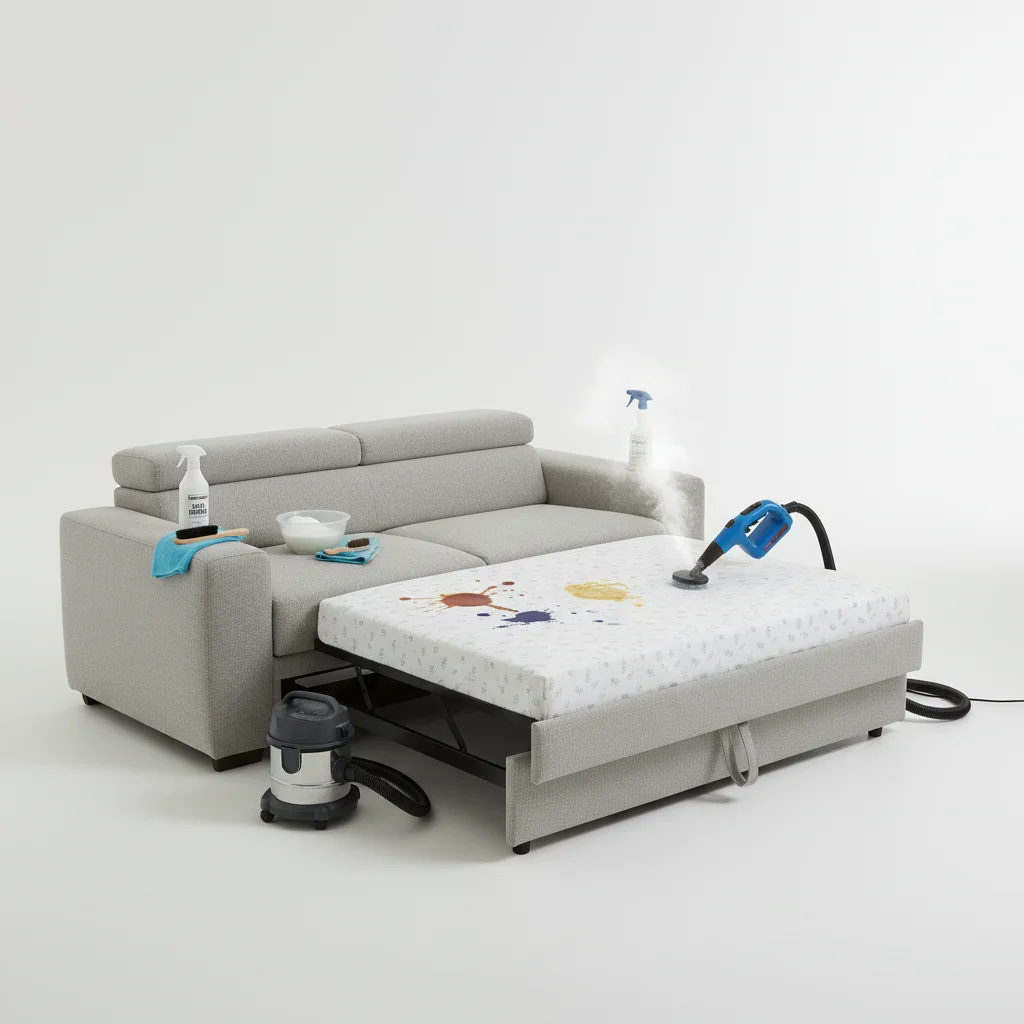
Effective sleeper sofa cleaning is crucial for maintaining its appearance and extending its lifespan. The key to successfully removing common stains like coffee, wine, and pet accidents lies in understanding the fabric type and acting quickly with the right cleaning agents. This guide details how to tackle these prevalent issues, ensuring your convertible furniture remains pristine.
Understanding Your Sleeper Sofa Fabric
Before attempting any stain removal, identify the fabric of your sleeper sofa. Common materials include cotton, linen, polyester, microfiber, and leather. Each fabric reacts differently to cleaning solutions. For instance, water-based cleaners are generally safe for most synthetic fabrics, while natural fibers like cotton and linen may require more delicate, dry-cleaning solvents to prevent water rings or shrinkage. Always test any cleaning solution on an inconspicuous area first. For compare top sleeper sofas on this site.
Tackling Coffee and Tea Stains
Coffee and tea stains are common but manageable. For fresh spills, blot the area immediately with a clean, dry cloth to absorb as much liquid as possible. Avoid rubbing, as this can spread the stain. Mix one tablespoon of white vinegar with one tablespoon of liquid dish soap and two cups of cool water. Apply the solution to a clean cloth and gently blot the stain. Repeat until the stain lifts, then blot with a damp cloth to rinse and finally with a dry cloth to absorb moisture. For stubborn or dried stains, a commercial upholstery cleaner designed for coffee stains may be necessary.
Removing Wine Stains from Upholstery
|
Our Picks for the Best Sleeper Sofa in 2026
As an Amazon Associate I earn from qualifying purchases.
|
||
| Num | Product | Action |
|---|---|---|
| 1 | Convertible Sofa Bed, Boneless Loveseat Folding Couch Bed Foldable - 3 in 1 Small Ccouch & Futon Sofa Sleeper, Corduroy Pull Out Couch with 4 Pillows for Living Room, Black |

|
| 2 | Convertible Sofa Bed Queen,5-in-1 Tri-Fold Boneless Couch with Removable Armrests & Handle,Corduroy Futon Sleeper Sofa,Floor Folding Mattress Pull Out Bed for Small Space Apartment Living Room Bedroom |
|
| 3 | MeMoreCool Boneless Folding Sofa Bed Queen – Corduroy Convertible Futon Couch, 2-in-1 Floor Sleeper with Foam Support, Detachable Pillow & Washable Cover for Living Room, Guest Room, Apartment |
|
| 4 | MAXYOYO Folding Sofa Bed, Convertible Sleeper Chair with Pilow Foldable Matress with Back Support, Portable Fold Out Chair Bed Comfy Floor Sofa Lounge for Living Room Bedroom, Beige, Double |
|
| 5 | 79" Convertible Sleeper Sofa Bed with Cylindrical Pillow, Corduroy Folding Mattress Couch with Fixed-Shape Frame, Floor Sofa Lounge Couch for Living Room Bedroom Lounge Studio (Green) |
|
| 6 | Folding Sofa Bed, Convertible Sleeper Chair with Back Support and Pillow Futon,Boneless Foldable Couch for Living Room/Guest Use/Home Office, Foldable Chair Bed for Adults, Dark Gray |
|
| 7 | Oversized Boneless Loveseat, 3 Seater Pull Out Convertible Sofa Bed, 70" Gray Boneless Couch Fold Out Floor Couch Sleeper Sofa with 5 Pillows for Living Room Bedroom Lounge Small Space |
|
| 8 | COMAX Futon Sofa Bed, Convertible Folding Sofa Bed, Boneless Couch Loveseat Corduroy with Pillows, Small Foldable Floor Couch Comfy Lounge Sleeper for Living Room Bedroom, Green |
|
| 9 | Loveseat Boneless Convertible Sofa Bed, Folding Floor Futon Sleeper Sofa Couch Bed- Boneless Foldable Couch, Corduroy Pull Out Sofa Bed with 2 Pillows for Living Room & Bedroom |
|
| 10 | 5-in-1 Convertible Sofa Bed,60" Boneless Couch Tri Folding Floor Mattress with Removable L-Shaped Armrests & Handle,Corduroy Futon Couch Sleeper with Pull Out Bed for Living Room Bedroom Apartment |
|
Red wine stains require swift action. Start by blotting the excess wine with a clean cloth. Do not rub. Sprinkle a generous amount of salt over the stain; the salt will absorb the wine. Let it sit for 10-15 minutes, then vacuum up the salt. Next, create a paste with baking soda and a small amount of water. Apply the paste to the stain and let it sit for another 15-20 minutes. Gently blot the area with a damp cloth to remove the paste and the remaining stain. For persistent wine stains, a specialized wine stain remover can be highly effective.
Dealing with Pet Accidents and Odors
Pet accidents not only stain but also leave behind unpleasant odors. For urine or vomit, first, remove any solid matter and blot up as much liquid as possible. Mix a solution of equal parts white vinegar and water, and spray it onto the affected area. The vinegar neutralizes the odor and helps break down the stain. Let it sit for 10-15 minutes, then blot dry. Follow up with an enzymatic cleaner, which is specifically designed to break down organic matter and eliminate odors at their source. Ensure the area is thoroughly dry to prevent mold or mildew.
General Maintenance Tips for Longevity
Regular maintenance can significantly reduce the frequency and severity of stains. Vacuum your sleeper sofa weekly to remove dust and debris that can become embedded in the fabric. Address spills immediately to prevent them from setting. Consider using fabric protectors, especially on new furniture, to create a barrier against spills and stains. Rotate cushions periodically to ensure even wear and tear. For deep cleaning, consider professional upholstery cleaning every 12-18 months.
- Vacuum weekly with an upholstery attachment.
- Blot spills immediately with a clean, dry cloth.
- Test cleaning solutions on an inconspicuous area first.
- Use fabric protectors for added stain resistance.
- Consider professional cleaning annually for deep maintenance.
Get our weekly buyer guide
Practical specs, not advice. Unsubscribe anytime.
