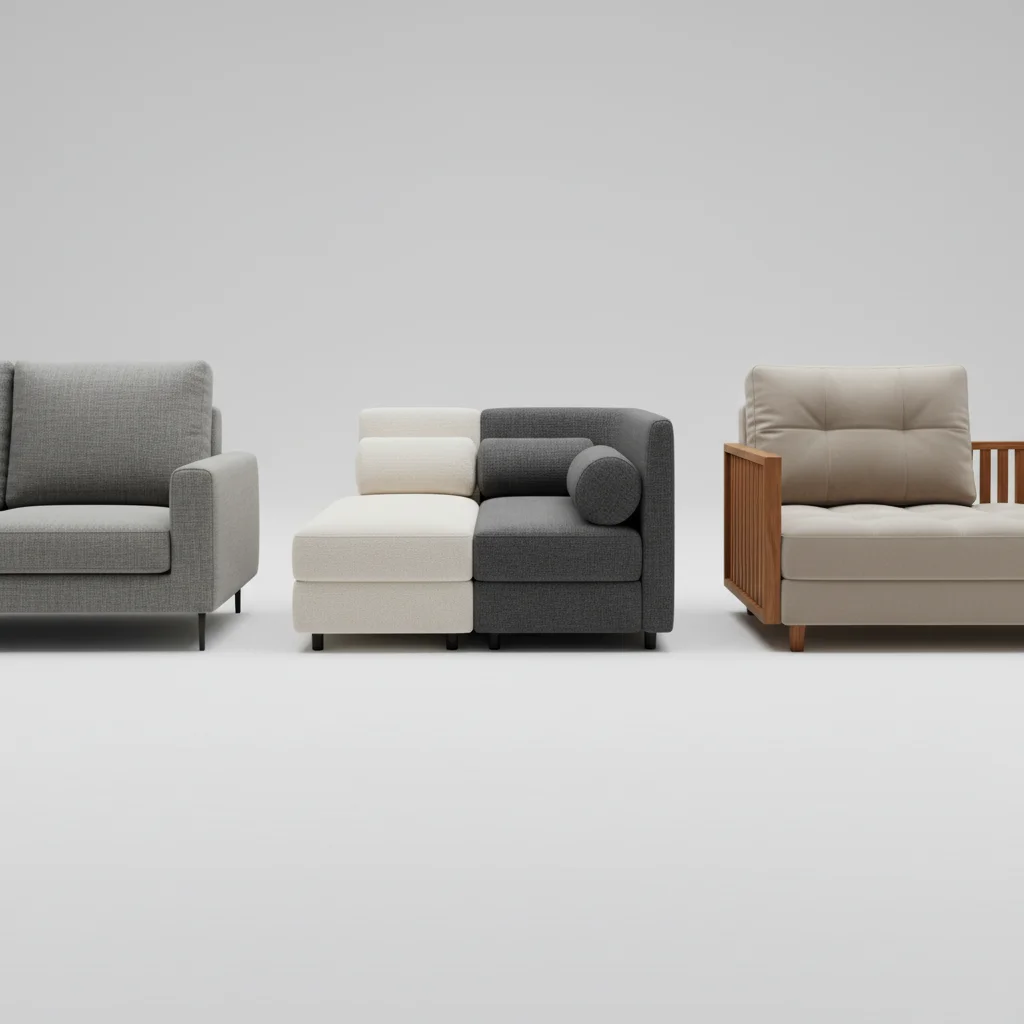
When choosing a sleeper sofa, the backrest style significantly impacts comfort, especially for lumbar support. The best sleeper sofa backrests for optimal lumbar support typically feature a medium-firm density with a slight recline and a contoured design. This combination helps maintain the natural curve of the spine, preventing discomfort during sitting or lounging.
There are several common backrest styles, each with varying degrees of lumbar support. Understanding these differences can help you select a sleeper sofa that meets your specific comfort needs. For explore our sleeper sofas reviews on this site.
Understanding Different Sleeper Sofa Backrest Designs
Sleeper sofas come with a variety of backrest designs, from plush, pillow-back styles to more structured, tight-back options. Pillow-back sofas, while appearing soft, often lack consistent lumbar support as the cushions can shift and flatten over time. In contrast, tight-back designs offer a more consistent and firm support, which can be beneficial for spinal alignment.
Another important consideration is the height of the backrest. A higher backrest can provide better support for the shoulders and upper back, complementing the lumbar support. Look for designs that allow your feet to rest flat on the floor when seated, ensuring proper posture and reducing strain on your lower back.
The Role of Cushion Density in Lumbar Support
The density of the backrest cushions plays a crucial role in how much lumbar support a sleeper sofa provides. Cushions that are too soft will offer inadequate support, allowing your back to sink in and potentially leading to poor posture. Conversely, overly firm cushions can feel rigid and uncomfortable, failing to conform to the natural curve of your spine.
A medium-firm density, often achieved with high-resiliency foam or a combination of foam and down, is generally ideal. This type of filling offers enough give to be comfortable while still providing the necessary resistance to support your lower back effectively. Always test the backrest by sitting for a few minutes to assess its comfort and support level.
Ergonomic Features for Enhanced Back Support
|
Our Picks for the Best Sleeper Sofa in 2026
As an Amazon Associate I earn from qualifying purchases.
|
||
| Num | Product | Action |
|---|---|---|
| 1 | Convertible Sofa Bed Queen,5-in-1 Tri-Fold Boneless Couch with Removable Armrests & Handle,Corduroy Futon Sleeper Sofa,Floor Folding Mattress Pull Out Bed for Small Space Apartment Living Room Bedroom |

|
| 2 | 79" Convertible Sleeper Sofa Bed with Cylindrical Pillow, Corduroy Folding Mattress Couch with Fixed-Shape Frame, Floor Sofa Lounge Couch for Living Room Bedroom Lounge Studio (Green) |
|
| 3 | COMAX Futon Sofa Bed, Convertible Folding Sofa Bed, Boneless Couch Loveseat Corduroy with Pillows, Small Foldable Floor Couch Comfy Lounge Sleeper for Living Room Bedroom, Green |
|
| 4 | Folding Sofa Bed, Convertible Sleeper Chair with Back Support and Pillow Futon,Boneless Foldable Couch for Living Room/Guest Use/Home Office, Foldable Chair Bed for Adults, Dark Gray |
|
| 5 | Convertible Sofa Bed, Boneless Loveseat Folding Couch Bed Foldable - 3 in 1 Small Ccouch & Futon Sofa Sleeper, Corduroy Pull Out Couch with 4 Pillows for Living Room, Black |
|
| 6 | Oversized Boneless Loveseat, 3 Seater Pull Out Convertible Sofa Bed, 70" Gray Boneless Couch Fold Out Floor Couch Sleeper Sofa with 5 Pillows for Living Room Bedroom Lounge Small Space |
|
| 7 | 5-in-1 Convertible Sofa Bed,60" Boneless Couch Tri Folding Floor Mattress with Removable L-Shaped Armrests & Handle,Corduroy Futon Couch Sleeper with Pull Out Bed for Living Room Bedroom Apartment |
|
| 8 | MAXYOYO Folding Sofa Bed, Convertible Sleeper Chair with Pilow Foldable Matress with Back Support, Portable Fold Out Chair Bed Comfy Floor Sofa Lounge for Living Room Bedroom, Beige, Double |
|
| 9 | Loveseat Boneless Convertible Sofa Bed, Folding Floor Futon Sleeper Sofa Couch Bed- Boneless Foldable Couch, Corduroy Pull Out Sofa Bed with 2 Pillows for Living Room & Bedroom |
|
| 10 | MeMoreCool Boneless Folding Sofa Bed Queen – Corduroy Convertible Futon Couch, 2-in-1 Floor Sleeper with Foam Support, Detachable Pillow & Washable Cover for Living Room, Guest Room, Apartment |
|
Some sleeper sofas incorporate specific ergonomic features designed to enhance back support. These can include built-in lumbar pillows, adjustable backrests, or even recline functions. An adjustable backrest allows you to customize the angle to find the most comfortable position for your spine, which is particularly beneficial for individuals with specific back conditions.
Consider sleeper sofas that have a slight backward tilt in their design, as this can naturally encourage better posture. The angle should not be so steep that it causes you to slouch, but just enough to relieve pressure on the lower back.
Top Backrest Styles for Lumbar Comfort
When prioritizing lumbar support, certain backrest styles consistently outperform others. Here are some of the best options:
- Tight-Back Sofas: These offer firm, consistent support as the back cushions are fixed and do not shift.
- Tufted Backs: The tufting creates depressions that can cradle the back, offering a degree of contoured support.
- Channel-Tufted Backs: Similar to tufted, but with vertical or horizontal channels that can provide structured support.
- Sofas with Integrated Lumbar Support: Some modern designs include a subtle curve or extra padding in the lower back area.
- Adjustable Backrests: The ability to change the backrest angle allows for personalized lumbar comfort.
Maintenance Tips for Sustaining Backrest Support
Even the best-designed backrests can lose their support over time if not properly maintained. Regularly fluffing and rotating removable back cushions can help prevent premature wear and maintain their shape and density. For tight-back sofas, periodic vacuuming and spot cleaning will help preserve the integrity of the upholstery and the underlying support structure.
Avoid prolonged exposure to direct sunlight, which can degrade foam and fabric, leading to a loss of firmness. If your sleeper sofa has a removable back, consider flipping it occasionally to distribute wear evenly.
Get our weekly buyer guide
Practical specs, not advice. Unsubscribe anytime.

This really helped me understand why my current sleeper sofa always feels uncomfortable after a while. I never realized how much the backrest style mattered for lumbar support. I’m definitely going to look for a tight-back design with a slight recline for my next purchase. It’s good to know what to specifically look for now.
I’ve been on the hunt for a sleeper sofa that actually supports my back, and the advice here about contoured designs was spot on. My old one had a pillow-back and it was just a disaster for my lower back. The new one I got, following the recommendations for a medium-firm density, has made a huge difference. No more waking up with aches after a movie night!
Finally, someone talks about the importance of a good backrest! I always thought it was just about the mattress part of the sleeper. The explanation about how a contoured design helps maintain the natural curve of the spine was super helpful. I’m so glad I read this before making a big purchase, it saved me from another bad back experience.
I appreciate the breakdown of different backrest designs. I ended up getting a sleeper sofa that was described as having a ‘medium-firm’ back, but it still feels a little too soft for my liking, especially after a few months. It’s better than my old one, but I was hoping for something a bit more consistently supportive. Maybe I just need to add an extra lumbar pillow.