A squeaky sleeper sofa mechanism can be quickly silenced by tightening loose bolts and screws and lubricating moving metal parts with silicone spray or white lithium grease. This common issue often stems from friction or instability within the sofa’s folding components, which can be resolved with basic tools in under an hour. Addressing these problems promptly restores comfort and prevents potential long-term damage to the furniture.
Understanding the Squeak: Common Causes of Noise
A squeaking sleeper sofa often signals that one or more components require attention. Understanding the root cause is the first step toward a successful fix. The mechanism of a sleeper sofa is a complex interplay of metal and sometimes wood, all designed to move smoothly. When these parts encounter friction or become loose, noise is the inevitable result.
The most frequent culprits behind a noisy mechanism include:
- Loose Bolts and Screws: Over time and with regular use, the nuts, bolts, and screws that hold the sofa bed’s frame and folding mechanism together can loosen. This allows parts to rub against each other, creating a distinct creaking or squeaking sound.
- Lack of Lubrication: Metal hinges, joints, and springs within the mechanism require proper lubrication to move silently. When these areas dry out, friction increases, leading to metal-on-metal grinding or squeaking. This is particularly common in older sofas or those that haven’t been regularly maintained.
- Worn or Damaged Parts: Springs can become dislodged or lose their tension, and bushings (small inserts that reduce friction) can wear out. Rust on metal components can also contribute to noise by impeding smooth movement.
- Frame Issues: While the mechanism is often the primary suspect, a squeak can sometimes originate from the sofa’s main frame. Wood rubbing against wood in loose joints or a cracked wooden frame can generate noise, especially as the sofa flexes.
- Obstructions: Sometimes, a small foreign object like a stray coin, a piece of fabric, or even a dust bunny can become lodged within the mechanism, interfering with its smooth operation and causing friction and noise.
- Environmental Factors: Changes in temperature and humidity can cause materials like wood and metal to expand and contract, leading to increased play between components and potential squeaks.
- Normal Settling: For brand new sleeper sofas, some initial creaking can be normal as the frame and mechanism “bed in” and adjust to use. This typically subsides after a few weeks.
Pinpointing the exact source of the squeak is crucial, as it dictates the most effective solution.
Essential Tools and Materials
Before you begin, gather the necessary tools and materials to ensure a smooth repair process. Having everything on hand will prevent interruptions and make the job quicker.
Here’s what you’ll likely need:
- Wrenches or Socket Set: For tightening nuts and bolts, especially those on the metal mechanism.
- Screwdrivers: Both Phillips-head and flat-head screwdrivers will be useful for various screws.
- Flashlight: Essential for peering into dark crevices and identifying loose fasteners or friction points beneath the sofa.
- Pliers: Can be helpful for minor adjustments or if you encounter a stubborn nut.
- Protective Gloves: To keep your hands clean and safe, especially when working with lubricants.
- Clean Rags or Cloths: For wiping away dust, grime, and excess lubricant.
- Lubricant: This is key for metal-on-metal friction. Recommended options include:
- Silicone Spray: A popular choice that provides long-lasting lubrication and is less likely to attract dust and dirt compared to oil-based options.
- White Lithium Grease: Excellent for heavy-duty lubrication and provides good protection against corrosion, ideal for metal components. It’s thicker and stays put well.
- Dry Graphite Lubricant: Another good option, particularly for areas where you want to avoid a wet residue.
- Avoid WD-40 for lasting lubrication: While WD-40 can temporarily reduce friction, it’s primarily a penetrating oil designed to free seized parts. For long-term lubrication, silicone spray or lithium grease are more effective as they don’t attract as much dust.
- Optional:
- Dry Soap Bar or Plastic Washers: For wooden joints where wood-on-wood friction might be occurring, rubbing screws with dry soap or adding plastic washers can act as a buffer and lubricant.
- Wood Glue: If you discover loose wooden joints in the frame, wood glue can help secure them.
“Many squeaks are simply the result of loose fasteners or dry metal. A simple tightening and lubrication routine can often resolve the issue in under an hour, saving you the cost and hassle of professional repair.” – Sarah Jenkins, Furniture Repair Specialist
Step-by-Step Guide to Fixing a Squeaky Sleeper Sofa
Now that you have your tools ready, follow these steps to systematically diagnose and eliminate the squeaks from your sleeper sofa mechanism.
Step 1: Locate the Source of the Squeak
|
Our Picks for the Best Sleeper Sofa in 2026
As an Amazon Associate I earn from qualifying purchases.
|
||
| Num | Product | Action |
|---|---|---|
| 1 | Convertible Sofa Bed, Boneless Loveseat Folding Couch Bed Foldable - 3 in 1 Small Ccouch & Futon Sofa Sleeper, Corduroy Pull Out Couch with 4 Pillows for Living Room, Black |

|
| 2 | Convertible Sofa Bed Queen,5-in-1 Tri-Fold Boneless Couch with Removable Armrests & Handle,Corduroy Futon Sleeper Sofa,Floor Folding Mattress Pull Out Bed for Small Space Apartment Living Room Bedroom |
|
| 3 | Folding Sofa Bed, Convertible Sleeper Chair with Back Support and Pillow Futon,Boneless Foldable Couch for Living Room/Guest Use/Home Office, Foldable Chair Bed for Adults, Dark Gray |
|
| 4 | 5-in-1 Convertible Sofa Bed,60" Boneless Couch Tri Folding Floor Mattress with Removable L-Shaped Armrests & Handle,Corduroy Futon Couch Sleeper with Pull Out Bed for Living Room Bedroom Apartment |
|
| 5 | MAXYOYO Folding Sofa Bed, Convertible Sleeper Chair with Pilow Foldable Matress with Back Support, Portable Fold Out Chair Bed Comfy Floor Sofa Lounge for Living Room Bedroom, Beige, Double |
|
| 6 | Oversized Boneless Loveseat, 3 Seater Pull Out Convertible Sofa Bed, 70" Gray Boneless Couch Fold Out Floor Couch Sleeper Sofa with 5 Pillows for Living Room Bedroom Lounge Small Space |
|
| 7 | MeMoreCool Boneless Folding Sofa Bed Queen – Corduroy Convertible Futon Couch, 2-in-1 Floor Sleeper with Foam Support, Detachable Pillow & Washable Cover for Living Room, Guest Room, Apartment |
|
| 8 | 79" Convertible Sleeper Sofa Bed with Cylindrical Pillow, Corduroy Folding Mattress Couch with Fixed-Shape Frame, Floor Sofa Lounge Couch for Living Room Bedroom Lounge Studio (Green) |
|
| 9 | COMAX Futon Sofa Bed, Convertible Folding Sofa Bed, Boneless Couch Loveseat Corduroy with Pillows, Small Foldable Floor Couch Comfy Lounge Sleeper for Living Room Bedroom, Green |
|
| 10 | Loveseat Boneless Convertible Sofa Bed, Folding Floor Futon Sleeper Sofa Couch Bed- Boneless Foldable Couch, Corduroy Pull Out Sofa Bed with 2 Pillows for Living Room & Bedroom |
|
Before you start tightening or lubricating, you need to pinpoint exactly where the noise is coming from.
- Clear the Area: Remove all cushions, pillows, and the mattress from the sleeper sofa. This gives you unobstructed access to the mechanism and frame.
- Open the Mechanism: Fully extend the sleeper sofa into its bed position. This exposes all the moving parts.
- Inspect Visually: Use your flashlight to carefully examine the entire mechanism, including hinges, springs, bars, and the frame. Look for any obvious signs of wear, rust, loose bolts, or foreign objects.
- Listen Actively: With the bed extended, gently press down on different sections of the metal frame and mechanism, or carefully move parts of the frame. Listen closely to identify the precise area where the squeak originates. Have someone else move the bed mechanism while you listen and observe, if possible, as this can often make the squeak more apparent.
- Test the Frame: If the squeak isn’t clearly from the metal mechanism, try gently rocking the main sofa frame while the bed is retracted, listening for creaks that might indicate loose wooden joints.
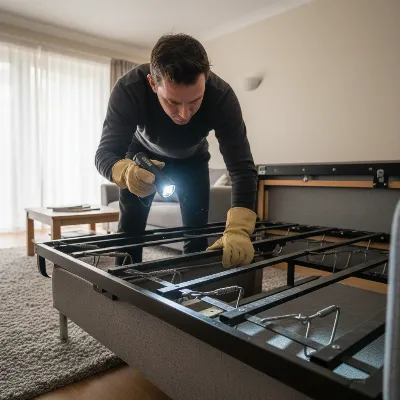 Person inspecting a squeaky sleeper sofa mechanism with a flashlight.
Step 2: Tighten All Bolts and Screws
Loose fasteners are one of the most common causes of squeaks. This step often provides a quick and significant improvement.
- Access All Fasteners: With the mechanism fully extended and mattress removed, thoroughly inspect every bolt, nut, and screw you can find on the metal mechanism and any visible parts of the sofa’s frame.
- Tighten Methodically: Use your wrench, socket set, or screwdriver to tighten each fastener. Be firm but avoid overtightening, as this can strip threads or damage components.
- Check Wooden Joints: If your sofa has a wooden frame, also check any exposed wooden joints. If you find loose screws in wooden parts, you might consider removing them, rubbing them with a bar of dry soap, or adding small plastic washers before re-tightening to reduce wood-on-wood friction. If wooden joints appear loose or gappy, wood glue can be applied and clamped (if possible) for a more permanent fix, but this is a more involved repair.
Step 3: Lubricate Moving Parts
Once everything is tightened, lubrication is the next critical step to eliminate friction-related noises.
- Choose the Right Lubricant: Opt for a silicone spray or white lithium grease for metal components. These lubricants are designed to reduce friction effectively and are less likely to attract dust than traditional oils.
- Apply Sparingly: Apply a small amount of your chosen lubricant to all hinges, pivots, springs, and sliding metal parts of the mechanism. Focus on areas where metal rubs against metal.
- Work the Mechanism: After applying the lubricant, gently open and close the sofa bed mechanism a few times to help distribute the lubricant evenly into the moving joints. This ensures the lubricant penetrates all the necessary contact points.
- Wipe Excess: Use a clean rag to wipe away any excess lubricant. This prevents it from dripping onto your upholstery or attracting dust and dirt over time.
Step 4: Check for Worn or Damaged Parts
If tightening and lubricating haven’t completely resolved the squeak, it’s time to look for more substantial wear and tear.
- Inspect Springs: Carefully examine all springs for signs of rust, bending, or if they are dislodged from their clips. If a spring is dislodged, try to reattach it. If springs are rusted or severely bent, they may need to be replaced.
- Examine Rollers and Bushings: Some mechanisms use rollers or small plastic/nylon bushings at pivot points. Check if these are cracked, worn, or missing. Worn bushings can be a source of persistent squeaks and might need replacement.
- Check Frame Integrity: Look for cracks in the metal frame or significant bending. While less common, a compromised frame can be difficult to repair yourself and may indicate a need for professional help or replacement of the mechanism.
- Remove Obstructions: Double-check for any foreign objects that might have been overlooked during your initial inspection. Sometimes, a small item can cause significant disruption to the smooth movement of the mechanism.
Preventative Maintenance for Your Sleeper Sofa
Regular maintenance can significantly extend the life of your sleeper sofa and prevent future squeaks. Integrating a few simple habits into your routine can keep your mechanism operating smoothly and silently.
- Routine Inspection and Tightening: Make it a habit to inspect and tighten all visible bolts, nuts, and screws on your sofa bed mechanism every few months. This proactive approach can catch loosening fasteners before they lead to noticeable squeaks.
- Periodic Lubrication: Depending on how frequently you use the bed, apply a silicone-based lubricant to the metal hinges and moving parts of the mechanism every three to six months, or at least annually. Consistent lubrication is key to reducing friction and wear.
- Proper Use and Weight Distribution: Avoid jumping or dropping heavily onto the sofa bed, as sudden impacts can loosen joints and strain the mechanism. Distribute weight evenly when sitting or sleeping on the sofa to prevent undue stress on specific areas.
- Keep it Clean: Regularly vacuum around and within the mechanism to prevent dust, pet hair, and debris from accumulating. Debris can interfere with moving parts and increase friction.
- Protect the Mattress: Using a mattress protector not only extends the life of your mattress but can also help prevent small items or fabric pieces from falling into the mechanism.
- Store Bedding Separately: If your sleeper sofa mechanism allows it, avoid storing heavy bedding inside when folded. This can put unnecessary pressure on the frame and mechanism over time.
Following these preventative measures will not only keep your sleeper sofa quiet but also ensure it remains a comfortable and reliable piece of furniture for years to come.
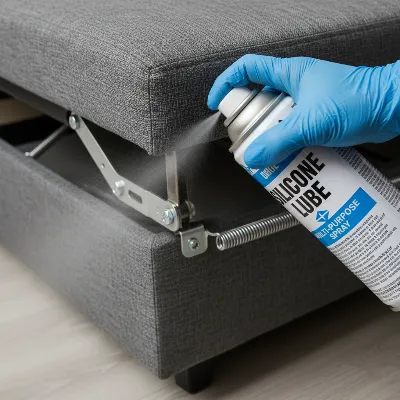 Hand applying silicone lubricant to a metal hinge of a sofa bed mechanism.
When to Call a Professional
While many squeaks can be resolved with DIY methods, there are instances when professional assistance is warranted. Knowing when to call in an expert can save you time, frustration, and potential further damage.
You should consider contacting a professional if:
- Persistent Squeaks: You’ve followed all the troubleshooting steps, but the squeaking persists or returns quickly after a fix. This might indicate a deeper, more complex issue that requires specialized tools or knowledge.
- Major Damage: You discover significant damage to the sofa’s frame, such as a cracked metal bar or a severely broken wooden joint that you cannot repair with basic tools.
- Complex Mechanism Issues: The mechanism is jammed, difficult to open or close, or appears severely misaligned. Trying to force it could cause irreversible damage.
- Under Warranty: If your sleeper sofa is still under warranty, attempting extensive DIY repairs might void it. It’s best to contact the manufacturer or retailer for assistance.
- Lack of Confidence: If you’re uncomfortable disassembling parts of the sofa or feel unsure about the repair process, a professional can provide peace of mind and ensure the job is done correctly.
Professionals have the experience to diagnose intricate problems and access to specific replacement parts or repair techniques that might not be available to the average homeowner.
Conclusion
A squeaky sleeper sofa mechanism can be a significant nuisance, transforming a convenient piece of furniture into a source of irritation. However, with a methodical approach, most common causes like loose fasteners, lack of lubrication, or minor obstructions can be quickly and effectively addressed. By taking the time to inspect, tighten, and lubricate your mechanism, you can often restore your sleeper sofa to its silent, smooth-operating glory. Regular preventative maintenance, including routine checks and lubrication, will help ensure your sofa remains quiet and comfortable for years to come. Don’t let a minor creak diminish the utility of your furniture; empower yourself with these simple fixes and reclaim the tranquility of your living space.
What steps will you take today to quiet your noisy sleeper sofa?
Frequently Asked Questions
Why does my sleeper sofa mechanism squeak when I open it?
A squeak when opening your sleeper sofa is most commonly caused by friction between dry metal parts in the folding mechanism or loose bolts and screws. Over time, lubrication can wear off, and fasteners can loosen, leading to metal-on-metal rubbing and noise.
Is WD-40 good for a squeaky sofa bed?
While WD-40 can provide temporary relief by penetrating and reducing friction, it’s not the best long-term lubricant for a squeaky sofa bed mechanism. It can attract dust and grime. For lasting lubrication, silicone spray or white lithium grease are generally more effective and recommended.
How often should I lubricate my sleeper sofa mechanism?
It’s recommended to lubricate your sleeper sofa mechanism every three to six months, or at least annually, especially if it’s frequently used. Regular lubrication prevents metal parts from drying out and developing friction-induced squeaks.
Can a new sleeper sofa squeak?
Yes, a new sleeper sofa can sometimes creak or squeak as its frame and mechanism settle into place. This is often normal and should subside after a few weeks of use. If the noise persists beyond this period, then it’s worth investigating for loose parts or lubrication needs.
What if my sleeper sofa still squeaks after tightening and lubricating?
If your sleeper sofa still squeaks after thoroughly tightening all fasteners and lubricating the mechanism, inspect for worn or damaged components like springs or bushings. Also, check the main sofa frame for loose wooden joints or obstructions. If the issue remains unresolved, it might be time to consult a professional furniture repair specialist.
Frequently Asked Questions
Why does my sleeper sofa mechanism squeak when I open it?
A squeak when opening your sleeper sofa is most commonly caused by friction between dry metal parts in the folding mechanism or loose bolts and screws. Over time, lubrication can wear off, and fasteners can loosen, leading to metal-on-metal rubbing and noise. Addressing these issues with a silicone spray or white lithium grease can often resolve the problem.
Is WD-40 good for a squeaky sofa bed?
While WD-40 can provide temporary relief by penetrating and reducing friction, it's not the best long-term lubricant for a squeaky sofa bed mechanism. It can attract dust and grime, potentially worsening the issue over time. For lasting lubrication, silicone spray or white lithium grease are generally more effective and recommended for metal components.
How often should I lubricate my sleeper sofa mechanism?
It's recommended to lubricate your sleeper sofa mechanism every three to six months, or at least annually, especially if it's frequently used. Regular lubrication with a silicone-based lubricant prevents metal parts from drying out and developing friction-induced squeaks, extending the life of your furniture.
Can a new sleeper sofa squeak?
Yes, a new sleeper sofa can sometimes creak or squeak as its frame and mechanism settle into place. This is often normal and should subside after a few weeks of use as components adjust. If the noise persists beyond this initial period, then it's worth investigating for loose parts or lubrication needs.
What if my sleeper sofa still squeaks after tightening and lubricating?
If your sleeper sofa still squeaks after thoroughly tightening all fasteners and lubricating the mechanism, inspect for worn or damaged components like springs or bushings. Also, check the main sofa frame for loose wooden joints or obstructions. If the issue remains unresolved, it might be time to consult a professional furniture repair specialist for a more in-depth diagnosis.
Fix a Squeaky Sleeper Sofa Mechanism
Silence your noisy sleeper sofa by identifying the source of the squeak, tightening loose fasteners, and lubricating moving parts.
Remove cushions and mattress, then fully extend the sofa bed. Visually inspect hinges, springs, and the frame for wear or loose parts. Gently press on different sections or move the mechanism to pinpoint the exact origin of the squeak.
Using wrenches or screwdrivers, methodically tighten every bolt, nut, and screw on the metal mechanism and visible frame. Be firm but avoid overtightening. Check wooden joints for looseness and consider wood glue for gappy areas.
Apply silicone spray or white lithium grease sparingly to all metal hinges, pivots, and springs where metal rubs against metal. Work the mechanism a few times to distribute the lubricant evenly, then wipe away any excess with a clean rag.
If squeaking persists, inspect springs for rust or dislodgement, and examine rollers or bushings for cracks or wear. Look for cracks in the metal frame or any foreign objects lodged within the mechanism. Replace damaged parts if possible, or consider professional help.
Get our weekly buyer guide
Practical specs, not advice. Unsubscribe anytime.

I was so frustrated with my sleeper sofa’s constant squeaking, especially when guests were over. I followed the advice here about tightening all the bolts and screws, and it made a huge difference! It took me less than an hour, just like it said, and now it’s practically silent. So glad I found these tips before I gave up on it completely.
This was a lifesaver! My sleeper sofa had developed a really annoying squeak that was driving me crazy. I followed the instructions to lubricate the moving metal parts and it completely fixed the problem. It’s amazing how a little maintenance can make such a big difference. Highly recommend trying these steps if your sofa is noisy.
My convertible sectional started making this awful grinding noise every time I pulled it out. I used some white lithium grease on the metal joints as recommended, and it worked wonders! It’s much smoother now and the noise is gone. I appreciate the clear steps, made it easy to tackle.
The silicone spray suggestion helped a bit with the friction noise on my older sleeper, but it didn’t completely eliminate the squeak. I think my issue might be more with the frame itself rather than just the moving parts. It’s definitely quieter, but still not perfect. Good starting point though.