A sleeper sofa is an incredibly versatile piece of furniture, offering both comfortable seating and an extra bed for guests. However, the mattress inside can suffer from significant wear and tear over time, leading to uncomfortable nights and frustrated visitors. If you’re tired of hearing complaints about the “bar in the back” or seeing visible sagging, replacing your sleeper sofa mattress yourself is a cost-effective and impactful DIY project. This guide will walk you through everything you need to know, from precise measurements to choosing the perfect replacement and installing it with confidence, transforming your sleeper sofa into a truly inviting sleep space.
Why Your Sleeper Sofa Mattress Needs an Upgrade
Over time, even the best sleeper sofa mattresses will lose their comfort and support. The constant folding and unfolding, combined with regular use, causes materials to compress, sag, and degrade. Ignoring these signs can lead to uncomfortable sleep for your guests and even potential damage to the sofa’s mechanism.
Common indicators that it’s time for a replacement include visible sagging or body impressions in the mattress, lumps and bumps that make the surface uneven, or the infamous sensation of feeling the metal support bars through the mattress. Guest complaints are often the most straightforward sign that an upgrade is overdue. Replacing the mattress is a practical solution that can significantly improve sleep quality and extend the life of your entire sleeper sofa, rather than investing in a brand new unit.
Essential Preparations: Measuring for Your New Mattress
Accurate measurement is the most critical step in ensuring your new sleeper sofa mattress fits perfectly and functions correctly. An ill-fitting mattress, especially one that is too thick, can prevent the mechanism from closing properly and potentially damage the frame and hinges.
Begin by fully opening your sleeper sofa mechanism, just as you would when preparing the bed. It’s crucial to remove the old mattress entirely before measuring to get the most accurate dimensions of the frame itself. Do not rely on the measurements of your old, potentially saggy or compressed mattress. You’ll need three key measurements:
- Width: Measure the inside edge of the frame from one side to the other. Take measurements at both the head and foot of the mechanism and use the smaller of the two if there’s a slight difference.
- Length: Measure from the inside of the head bar down to the inside of the foot bar. Again, measuring in a couple of spots helps ensure accuracy.
- Thickness (or Height) Clearance: This is arguably the trickiest but most vital measurement. Close the mechanism about halfway and carefully measure the maximum clearance space where the mattress will be folded. Most sleeper sofa mattresses are designed to be between 4 to 5 inches thick. Exceeding this thickness can prevent the sofa from closing properly and put undue stress on the folding mechanism.
Once you have your frame measurements, you can compare them to standard sleeper mattress sizes. While slight variations exist between manufacturers, common dimensions include:
- Twin Sleeper: Approximately 38 inches wide by 72 inches long.
- Full (or Double) Sleeper: Usually around 54 inches wide by 72 inches long.
- Queen Sleeper: The most common size, often about 60 inches wide by 72 inches long.
It’s important to note that sleeper sofa queen mattresses are typically shorter than standard queen bed mattresses, so always double-check the length.
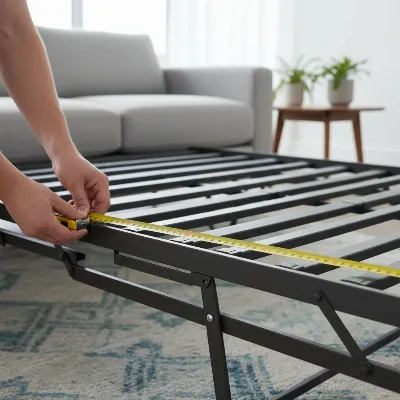 A person accurately measuring the width of a fully unfolded sleeper sofa frame with a tape measure, highlighting the importance of precise measurements for replacement.
Choosing the Perfect Replacement Mattress
With accurate measurements in hand, the next step is selecting a new mattress that balances comfort, durability, and budget. Sleeper sofa mattresses come in various materials, each offering distinct advantages:
Common Sleeper Sofa Mattress Types
- Innerspring: These are traditional mattresses with coil systems. They offer a bouncy, familiar feel and are often the most budget-friendly option, suitable for occasional use. They provide decent airflow but can wear out faster and may lead to feeling the support bars over time.
- Memory Foam: Known for its contouring properties, memory foam adapts to your body shape, relieving pressure points and providing excellent support. It’s ideal for frequent guests and can significantly improve comfort compared to a basic innerspring. However, traditional memory foam can sometimes retain heat.
- Gel-Infused Foam: This is a popular variation of memory foam that incorporates cooling gel beads or swirls. The gel helps to dissipate heat, addressing the common complaint of memory foam sleeping too hot, while still offering excellent pressure relief and body-conforming comfort.
- Latex: Made from natural or synthetic rubber, latex mattresses are highly durable, responsive, and naturally cooling. They offer a buoyant, supportive feel and are often hypoallergenic. While typically a more premium option, latex can provide exceptional longevity and comfort.
- Polyurethane Foam: A versatile and often more affordable foam option. Its feel can vary greatly depending on its density and composition. It’s a good middle-ground option for those looking for a foam mattress without the higher cost of memory foam or latex.
|
Our Picks for the Best Sleeper Sofa in 2026
As an Amazon Associate I earn from qualifying purchases.
|
||
| Num | Product | Action |
|---|---|---|
| 1 | Oversized Boneless Loveseat, 3 Seater Pull Out Convertible Sofa Bed, 70" Gray Boneless Couch Fold Out Floor Couch Sleeper Sofa with 5 Pillows for Living Room Bedroom Lounge Small Space |

|
| 2 | COMAX Futon Sofa Bed, Convertible Folding Sofa Bed, Boneless Couch Loveseat Corduroy with Pillows, Small Foldable Floor Couch Comfy Lounge Sleeper for Living Room Bedroom, Green |
|
| 3 | Convertible Sofa Bed Queen,5-in-1 Tri-Fold Boneless Couch with Removable Armrests & Handle,Corduroy Futon Sleeper Sofa,Floor Folding Mattress Pull Out Bed for Small Space Apartment Living Room Bedroom |
|
| 4 | MeMoreCool Boneless Folding Sofa Bed Queen – Corduroy Convertible Futon Couch, 2-in-1 Floor Sleeper with Foam Support, Detachable Pillow & Washable Cover for Living Room, Guest Room, Apartment |
|
| 5 | 79" Convertible Sleeper Sofa Bed with Cylindrical Pillow, Corduroy Folding Mattress Couch with Fixed-Shape Frame, Floor Sofa Lounge Couch for Living Room Bedroom Lounge Studio (Green) |
|
| 6 | Loveseat Boneless Convertible Sofa Bed, Folding Floor Futon Sleeper Sofa Couch Bed- Boneless Foldable Couch, Corduroy Pull Out Sofa Bed with 2 Pillows for Living Room & Bedroom |
|
| 7 | MAXYOYO Folding Sofa Bed, Convertible Sleeper Chair with Pilow Foldable Matress with Back Support, Portable Fold Out Chair Bed Comfy Floor Sofa Lounge for Living Room Bedroom, Beige, Double |
|
| 8 | 5-in-1 Convertible Sofa Bed,60" Boneless Couch Tri Folding Floor Mattress with Removable L-Shaped Armrests & Handle,Corduroy Futon Couch Sleeper with Pull Out Bed for Living Room Bedroom Apartment |
|
| 9 | Folding Sofa Bed, Convertible Sleeper Chair with Back Support and Pillow Futon,Boneless Foldable Couch for Living Room/Guest Use/Home Office, Foldable Chair Bed for Adults, Dark Gray |
|
| 10 | Convertible Sofa Bed, Boneless Loveseat Folding Couch Bed Foldable - 3 in 1 Small Ccouch & Futon Sofa Sleeper, Corduroy Pull Out Couch with 4 Pillows for Living Room, Black |
|
When making your choice, consider the primary use of the sleeper sofa. If it’s for occasional guests, a quality innerspring or polyurethane foam might suffice. For more frequent use or guests who require extra comfort, memory foam, gel-infused foam, or latex are superior choices. Always reconfirm the mattress thickness; most sleeper sofa mechanisms are designed for mattresses between 4 to 5 inches thick.
Look for certifications such as CertiPUR-US® for foam mattresses, which ensures they are made without harmful chemicals, or GOLS (Global Organic Latex Standard) for organic latex, guaranteeing eco-friendliness and safety.
Gathering Your Tools and Materials
One of the best parts about replacing a sleeper sofa mattress is that it typically requires minimal tools. Here’s what you’ll likely need:
- Your New Sleeper Sofa Mattress: Purchased based on your precise measurements and comfort preferences.
- Measuring Tape: For a final check and to ensure proper alignment.
- Box Cutter or Scissors: To carefully open the packaging of your new mattress.
- Pliers or Wire Cutters (Optional): If your old mattress is secured to the frame with ties, clips, or old wiring.
- A Helper (Recommended): While possible alone, having an extra set of hands can make removing the old mattress and positioning the new one much easier, especially for larger sizes.
Step-by-Step DIY Replacement Process
Replacing your sleeper sofa mattress is a relatively straightforward process once you have the right measurements and replacement in hand.
Step 1: Prepare the Sofa
Fully extend the sleeper sofa mechanism into the bed position. Clear the area around the sofa to give yourself ample working space. Remove any bedding, mattress toppers, or protectors from the old mattress.
Step 2: Remove the Old Mattress
Most sleeper sofa mattresses are not heavily secured to the frame. They are typically held in place by their weight, the design of the frame, or sometimes with simple fabric ties or clips.
- Inspect Attachments: Carefully examine how your old mattress is attached to the frame. Look for fabric loops tied to the frame, metal clips, or even just elastic bands.
- Release Attachments: If there are ties, untie them. If there are clips, gently release them. If there are no obvious attachments, the mattress may simply be resting on the frame.
- Lift and Remove: With any attachments released, carefully lift the old mattress off the frame. If it’s heavy or cumbersome, this is where a helper comes in handy. Move the old mattress out of your workspace.
Step 3: Inspect the Frame
With the old mattress removed, take this opportunity to inspect the sleeper sofa’s metal frame.
- Check for Damage: Look for any bent bars, loose screws, damaged hinges, or broken springs in the support system. A bent support bar can contribute to discomfort even with a new mattress.
- Tighten and Repair: If you find loose screws or minor damage, address them now. You may need a screwdriver or a wrench for tightening. Serious damage might require professional repair or reconsideration of replacing the entire sofa.
Step 4: Position the New Mattress
Carefully unpackage your new sleeper sofa mattress. Most foam mattresses come compressed and rolled, so allow time for it to expand to its full size, usually a few hours or even up to 24-48 hours.
- Orient Correctly: Place the new mattress onto the extended frame, ensuring it’s oriented correctly (e.g., if it has a specific top or bottom side).
- Align and Smooth: Center the mattress on the frame, making sure it sits flat and aligns with all edges. Smooth out any wrinkles or unevenness, especially if it’s a foam mattress that’s still expanding.
- Secure (If Applicable): If your new mattress or sofa frame has provisions for ties or clips, secure the mattress to the frame. This can help prevent it from shifting during use and when folding the sofa.
Step 5: Test the Folding Mechanism
Once the new mattress is in place, slowly and carefully fold the sleeper sofa back into its upright, couch position.
- Observe Operation: Pay close attention to how the mattress folds and how the mechanism operates. There should be no excessive resistance, pinching, or bulging.
- Adjust if Needed: If the mechanism struggles to close or the mattress seems too snug, re-check your thickness measurements and consider if the mattress needs more time to fully decompress if it was rolled. In rare cases, if the mattress is genuinely too thick, it may need to be exchanged.
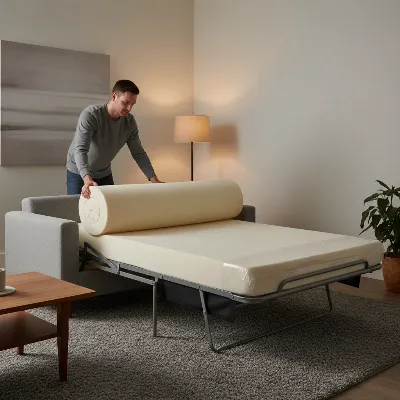 A person gently placing a new, uncompressed foam sleeper sofa mattress onto an extended metal frame in a bright living room.
Troubleshooting and Tips for Enhanced Comfort
Even with careful planning, minor issues can arise during or after installation.
- Mechanism Won’t Close: The most common culprit is a mattress that is too thick. Double-check your thickness clearance measurement. If you purchased a mattress at the maximum recommended thickness, ensure it has fully decompressed. Sometimes, a very firm foam mattress can feel thicker until it softens slightly with use.
- Mattress Shifts: If your mattress slides around, consider adding non-slip gripping pads underneath it or exploring options to attach it more securely to the frame using fabric ties or hook-and-loop fasteners.
- Still Feeling Bars: While a new mattress should largely mitigate this, if you still feel the metal bars, particularly on an older frame, you might consider adding a thin, high-quality mattress topper (1-2 inches) for an extra layer of cushioning. Ensure any topper you add allows the sofa to still fold properly.
- Inspect the Foundation: The support system beneath the mattress (often a spring mesh or wooden slats) is crucial. Ensure it’s in good condition and provides firm, even support. A weak foundation will compromise even the best new mattress.
> “A fresh, comfortable mattress is one of the easiest and most impactful upgrades you can make, turning a dreaded sleep spot into a genuinely cozy retreat.” – BILTRITE Furniture, Sleeper Sofa Experts
Conclusion
Replacing a worn-out sleeper sofa mattress is a rewarding DIY project that can dramatically improve the comfort and functionality of your multi-purpose furniture. By taking precise measurements, carefully selecting the right mattress type and thickness, and following a few simple steps, you can transform an uncomfortable sleeping experience into a welcoming haven for your guests. No longer will you dread accommodating overnight visitors; instead, you’ll be confident in offering them a restful night’s sleep. Are you ready to upgrade your sleeper sofa and say goodbye to those uncomfortable nights?
Frequently Asked Questions
Can I use a regular bed mattress on a sleeper sofa?
No, you absolutely cannot use a regular bed mattress on a sleeper sofa. Standard bed mattresses are too thick and rigid to fold into the sofa’s mechanism and will likely damage the frame, hinges, or the sofa itself. Sleeper sofa mattresses are specifically designed to be thinner (typically 4-5 inches) and flexible enough to fold properly.
How often should a sleeper sofa mattress be replaced?
The lifespan of a sleeper sofa mattress varies based on usage frequency and material quality, but generally, they should be replaced every 5-7 years for regular use, or sooner if visible sagging, lumps, or discomfort are present. Occasional use might extend this timeframe, but consistent poor sleep is a clear sign for an upgrade.
How thick should a sleeper sofa replacement mattress be?
Most sleeper sofa replacement mattresses should be between 4 to 5 inches thick. It is crucial to measure the exact clearance space within your specific sofa’s folding mechanism to ensure the new mattress will fit and allow the sofa to close properly without damage.
What are the benefits of upgrading to a memory foam sleeper sofa mattress?
Upgrading to a memory foam sleeper sofa mattress offers significant benefits, including superior pressure relief, body-contouring comfort, and reduced motion transfer. These qualities provide a more comfortable and supportive sleeping surface, ideal for frequent guests or those needing extra spinal alignment.
