Choosing the ideal sleeper sofa often feels like navigating a maze of options, from mechanisms to mattress types. Yet, one of the most significant decisions—and often the most debated—revolves around upholstery: leather or fabric? This choice profoundly impacts not only the aesthetic of your living space but also the long-term comfort, maintenance, and durability of a piece designed to serve dual functions. Whether you’re furnishing a compact apartment, a bustling family home, or a dedicated guest room, the material of your sleeper sofa dictates how it will look, feel, and perform year after year. Let’s delve into a comprehensive comparison to help you determine which material will truly elevate your home in 2026.
Choosing the Perfect Sleeper Sofa: A Detailed 2026 Guide
The foundation of a great sleeper sofa lies in its construction and, crucially, its upholstery. Each material brings a distinct set of characteristics that can either perfectly complement or significantly detract from your lifestyle. Understanding these nuances is key to making an informed decision that you’ll be happy with for years to come.
Understanding Sleeper Sofa Upholstery Types
|
Our Picks for the Best Sleeper Sofa in 2026
As an Amazon Associate I earn from qualifying purchases.
|
||
| Num | Product | Action |
|---|---|---|
| 1 | COMAX Futon Sofa Bed, Convertible Folding Sofa Bed, Boneless Couch Loveseat Corduroy with Pillows, Small Foldable Floor Couch Comfy Lounge Sleeper for Living Room Bedroom, Green |

|
| 2 | Loveseat Boneless Convertible Sofa Bed, Folding Floor Futon Sleeper Sofa Couch Bed- Boneless Foldable Couch, Corduroy Pull Out Sofa Bed with 2 Pillows for Living Room & Bedroom |
|
| 3 | MAXYOYO Folding Sofa Bed, Convertible Sleeper Chair with Pilow Foldable Matress with Back Support, Portable Fold Out Chair Bed Comfy Floor Sofa Lounge for Living Room Bedroom, Beige, Double |
|
| 4 | MeMoreCool Boneless Folding Sofa Bed Queen – Corduroy Convertible Futon Couch, 2-in-1 Floor Sleeper with Foam Support, Detachable Pillow & Washable Cover for Living Room, Guest Room, Apartment |
|
| 5 | 79" Convertible Sleeper Sofa Bed with Cylindrical Pillow, Corduroy Folding Mattress Couch with Fixed-Shape Frame, Floor Sofa Lounge Couch for Living Room Bedroom Lounge Studio (Green) |
|
| 6 | Convertible Sofa Bed, Boneless Loveseat Folding Couch Bed Foldable - 3 in 1 Small Ccouch & Futon Sofa Sleeper, Corduroy Pull Out Couch with 4 Pillows for Living Room, Black |
|
| 7 | Oversized Boneless Loveseat, 3 Seater Pull Out Convertible Sofa Bed, 70" Gray Boneless Couch Fold Out Floor Couch Sleeper Sofa with 5 Pillows for Living Room Bedroom Lounge Small Space |
|
| 8 | Convertible Sofa Bed Queen,5-in-1 Tri-Fold Boneless Couch with Removable Armrests & Handle,Corduroy Futon Sleeper Sofa,Floor Folding Mattress Pull Out Bed for Small Space Apartment Living Room Bedroom |
|
| 9 | Folding Sofa Bed, Convertible Sleeper Chair with Back Support and Pillow Futon,Boneless Foldable Couch for Living Room/Guest Use/Home Office, Foldable Chair Bed for Adults, Dark Gray |
|
| 10 | 5-in-1 Convertible Sofa Bed,60" Boneless Couch Tri Folding Floor Mattress with Removable L-Shaped Armrests & Handle,Corduroy Futon Couch Sleeper with Pull Out Bed for Living Room Bedroom Apartment |
|
Sleeper sofas come in a vast array of materials, but the primary distinction is often between leather and fabric. Each has its own identity, influencing everything from the initial feel to its longevity and how it integrates into your daily life.
Leather Sleeper Sofas
Leather sleeper sofas exude a sense of luxury and sophistication. They are typically upholstered in various types of animal hide, each offering different qualities in terms of look, feel, and durability. Genuine leather, particularly full-grain or top-grain, is known for its resilience and ability to develop a rich patina over time, making it an investment that ages gracefully. Bonded leather is a more budget-friendly option, a composite material made from leather scraps and polyurethane, which can mimic the look of genuine leather but may be less breathable and prone to cracking. Faux leather, or vegan leather, is a synthetic alternative designed for easy cleaning and affordability.
The inherent qualities of leather make it a compelling choice. It’s often hailed for its exceptional durability, with high-quality pieces lasting 15 to 20 years with proper care. This material is also remarkably easy to clean, as spills tend to bead on the surface, allowing for quick wiping without deep absorption. For those concerned about allergens, leather is a smart pick because its smooth surface resists dust mites, pet dander, and other common household allergens that can embed themselves in woven fabrics. Aesthetically, leather offers a timeless appeal, bringing a sleek and modern or classically elegant vibe to any room.
However, leather isn’t without its drawbacks. It typically comes with a higher upfront cost, especially for genuine, high-quality hides, making it a significant investment. Leather can also be sensitive to temperature, feeling cool in colder months and potentially sticky or hot in humid environments. The color and pattern options are generally more limited compared to fabric, leaning towards a palette of browns, blacks, and grays. While durable, leather can show scratches, though many find these marks contribute to its character and patina over time. Initially, new leather can feel quite stiff, requiring a break-in period to soften and conform.
Fabric Sleeper Sofas
Fabric sleeper sofas offer unparalleled versatility and a welcoming softness that many find instantly appealing. These sofas are upholstered in a wide range of materials, including natural fibers like cotton and linen, as well as synthetics such as microfiber and various blends. Each fabric type brings unique textures, durability levels, and maintenance requirements. Cotton and linen are breathable and soft, ideal for a relaxed feel, while microfiber is known for its stain resistance and velvety touch.
The primary advantage of fabric is its comfort. It’s soft to the touch, breathable, and often feels cozier and warmer, making it highly inviting for lounging. Fabric options provide an extensive palette of colors, patterns, and textures, allowing for immense customization to match any interior design style. This variety also makes fabric sleeper sofas generally more affordable upfront, with options available for almost every budget. Natural fabrics like linen and cotton also excel in breathability, which can be a significant comfort factor in warmer climates.
On the downside, fabric is more prone to absorbing spills and stains, which can be a challenge for busy households. Without protective treatments or removable covers, a simple spill can leave a lasting mark and fabric can also retain odors over time. In terms of durability, fabric generally has a shorter lifespan than high-quality leather, often showing signs of wear like fading, pilling, or thinning after about 5-10 years, depending on the material and usage. Fabric upholstery can also trap dust mites, pet hair, and other allergens, requiring more frequent and thorough cleaning for allergy sufferers.
Key Factors When Selecting a Sleeper Sofa
Beyond the initial appeal, several critical factors come into play when choosing between a leather and fabric sleeper sofa. These considerations are vital to ensure your investment truly serves your needs.
- Size and Space Usage: Regardless of material, measure your space accurately, considering both the sofa and the fully extended bed dimensions. Leather can sometimes appear more substantial due to its sleek finish, while fabric might visually blend more easily into a room. The weight of a leather sleeper sofa is generally higher, which can be a factor if you anticipate frequent rearranging.
- Material Durability and Longevity: This is where high-quality leather often shines, lasting 15-20 years. Fabric typically lasts 5-10 years, though performance fabrics can extend this. The frame material (solid wood or metal) is crucial for both, ensuring the sleeper mechanism functions smoothly for years.
- Operating Mechanism and Mattress Quality: While material-independent, the ease of converting the sofa to a bed and the comfort of the mattress are paramount. Modern sleeper sofas offer mechanisms that are much smoother than older models, and mattress options range from memory foam to innerspring, providing genuine sleeping comfort.
- Comfort and Feel: Fabric offers an immediate softness and warmth, feeling more “bed-like” for sleeping. Leather provides firm support that softens over time, adapting to your body. Its temperature sensitivity means it can feel cool in winter and warm in summer.
- Maintenance and Cleaning: Leather is renowned for easy spot cleaning and resistance to spills, often requiring just a quick wipe. Fabric, on the other hand, demands more regular vacuuming to remove trapped dust and allergens, and spills need prompt attention to prevent staining. Some fabrics offer stain-resistant treatments or removable, washable covers.
- Cost and Value: Fabric sleeper sofas are generally more affordable upfront. Leather represents a higher initial investment, but its extended lifespan and lower depreciation can make it a better long-term value. Consider your budget not just for the purchase, but also for ongoing care.
- Aesthetics and Style: Leather lends itself to modern, minimalist, or luxurious interiors, offering a sophisticated touch. Fabric, with its vast array of textures and patterns, can fit virtually any design theme, from bohemian to traditional, providing a warmer, cozier ambiance.
- Lifestyle Considerations:
- Pets and Kids: Leather is often preferred in homes with children and pets due to its resistance to spills and ease of wiping away pet hair. While durable, sharp pet claws can scratch leather. Many performance fabrics are also designed to withstand wear from active households.
- Allergies: Leather’s non-porous surface makes it a superior choice for allergy sufferers, as it doesn’t trap dust mites and dander like fabric can.
- Climate: Breathable natural fabrics or genuine leather can be more comfortable in hot climates, while plush fabrics offer warmth in colder regions.
Comparing Top Sleeper Sofa Material Options
Making the right choice for your sleeper sofa material depends heavily on prioritizing your specific needs. Here’s a detailed comparison to guide you:
| Feature | Leather Sleeper Sofas | Fabric Sleeper Sofas |
|---|---|---|
| Comfort & Feel | Firm support, softens over time, can be temperature-sensitive. | Soft, cozy, breathable, often feels warmer and more “bed-like.” |
| Durability | Excellent (15-20+ years for high-quality), develops patina. | Good (5-10 years), prone to fading/pilling over time. |
| Maintenance | Easy to wipe clean, resists spills, needs occasional conditioning. | Requires regular vacuuming, prompt spot cleaning; can stain easily. |
| Aesthetics | Luxurious, sleek, sophisticated, timeless. | Versatile, wide range of colors/patterns, warm, inviting. |
| Cost | Higher initial investment, better long-term value. | Lower initial cost, generally more budget-friendly. |
| Allergies | Hypoallergenic, resists dust mites and dander. | Can trap allergens, requires more diligent cleaning. |
| Pets & Kids | Good for spills/pet hair, may show scratches. | Can stain, may collect pet hair, but many durable options exist. |
| Breathability | Genuine leather is breathable; faux leather less so. | Natural fabrics (cotton, linen) are highly breathable. |
Choosing between these two comes down to your priorities. If you value a sophisticated aesthetic, long-term durability, easy cleanup for spills, and a hypoallergenic environment, a leather sleeper sofa is likely your best bet. It’s an investment that can truly stand the test of time, becoming a focal point in your living space.
On the other hand, if immediate softness, a vast array of design options, a warmer feel, and a more budget-friendly price point are paramount, a fabric sleeper sofa will serve you well. It’s perfect for creating a cozy, inviting atmosphere where comfort is king, and its versatility allows it to adapt to evolving decor.
“The ultimate choice in sleeper sofa upholstery hinges on balancing your immediate comfort desires with your long-term practical needs. Consider how your sofa will truly live in your home.” – Alex Chen, Interior Design Consultant
Top Sleeper Sofa Choices for Various Needs
Instead of specific models, let’s consider where each material excels, helping you identify the “top choice” for your particular scenario.
- For the Busy Family with Kids and Pets: A performance fabric sleeper sofa is a strong contender. Look for fabrics with stain-resistant coatings or tightly woven microfibers that can repel liquids and resist wear. While leather is also excellent for easy wipe-downs, the scratch resistance of certain performance fabrics can be a deciding factor for active households. Many modern options also feature removable, washable covers.
- For the Allergy Sufferer: A genuine leather sleeper sofa is the clear winner. Its smooth, non-porous surface does not trap dust, pet dander, or other allergens, making it significantly easier to keep clean and allergen-free. This ensures both comfortable lounging and a healthy night’s sleep for guests.
- For a High-Traffic, Formal Living Room: A top-grain or full-grain leather sleeper sofa offers unmatched elegance and durability. Its sophisticated appearance and ability to age beautifully make it an ideal choice for a room where aesthetics and longevity are paramount. The easy maintenance also suits a formal setting where quick cleanups are appreciated.
- For a Cozy Guest Room or Den: A plush fabric sleeper sofa (e.g., velvet, chenille, or a soft cotton blend) provides an inviting and warm ambiance. Fabric often feels more “bed-like,” enhancing the sleeping experience for guests. The wide range of colors and textures allows for perfect integration into a more intimate, comforting space.
- For the Budget-Conscious Decorator: A durable synthetic fabric sleeper sofa offers excellent value. Materials like polyester blends provide good resistance to wear and tear at a more accessible price point than genuine leather. Similarly, high-quality faux leather can offer a sleek look without the premium cost, though its long-term durability may be less than genuine leather.
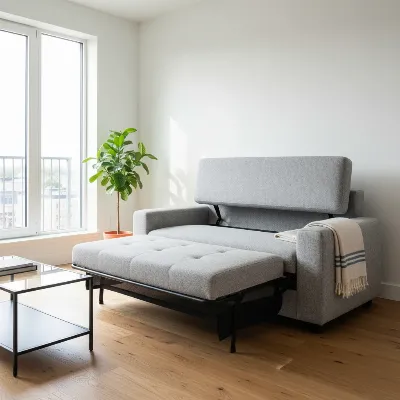 A modern sleeper sofa effortlessly transforming into a bed in a compact, stylish apartment living room.
Buying Your Sleeper Sofa
Purchasing a sleeper sofa is a significant investment. Careful planning ensures you find a piece that meets your functional and aesthetic needs.
- Pre-Purchase Steps:
- Measure Your Space: Accurately measure the area where the sofa will sit, considering both its sofa and bed configurations. Ensure there’s enough clearance for conversion and foot traffic. Don’t forget to measure doorways and stairwells for delivery.
- Define Your Needs: How often will it be used as a sofa? How often as a bed? Who will be using it? (e.g., children, elderly guests, daily use). This impacts your choices for durability, comfort, and ease of mechanism.
- Set Your Budget: Sleeper sofas vary widely in price. Determine a realistic budget, keeping in mind that high-quality leather will typically cost more upfront but may last longer.
- Where to Buy:
- Furniture Stores: Local and national furniture retailers offer the advantage of seeing and testing sofas in person. You can feel the upholstery, try out the conversion mechanism, and assess mattress comfort.
- Online Retailers: E-commerce sites provide a vast selection, often with competitive pricing and detailed customer reviews. Many offer virtual showrooms or fabric samples.
- Tips for the Best Value:
- Shop Sales: Major holidays and seasonal clearances are excellent times to find discounts.
- Check Warranties: A good warranty on both the frame and the mechanism is essential for a sleeper sofa.
- Read Reviews: Customer reviews offer insights into real-world performance, comfort, and durability.
- Consider Financing: Many retailers offer financing options that can make a higher-quality purchase more manageable.
Maintaining and Cleaning Your Sleeper Sofa
Proper care extends the life and beauty of your sleeper sofa, regardless of its material. Consistent maintenance is far easier than intensive cleaning after damage occurs.
- General Care Tips for Both:
- Vacuum Regularly: Use an upholstery attachment to remove dust, crumbs, and pet hair from cushions, crevices, and under the sofa.
- Fluff and Rotate Cushions: Daily fluffing and weekly rotation of cushions prevent uneven wear and maintain their shape.
- Address Spills Immediately: Blot (don’t rub) spills with a clean, dry cloth to absorb as much liquid as possible.
- Avoid Direct Sunlight: Prolonged exposure to UV rays can fade and damage both leather and fabric.
- Inspect and Lubricate Mechanism: For sleeper sofas, regularly check the pull-out mechanism for smooth operation and lubricate if needed. Air out the mattress periodically.
- Specific Care for Leather:
- Wipe Down: For most spills, a damp cloth is sufficient. Follow with a dry cloth.
- Conditioning: Leather benefits from conditioning 1-2 times a year to keep it supple and prevent drying or cracking. Use a leather-specific conditioner.
- Spot Cleaning: Use a mild leather cleaner for tougher spots, always testing on an inconspicuous area first.
- Specific Care for Fabric:
- Spot Cleaning: Use a mild, fabric-safe cleaning solution or a manufacturer-recommended cleaner. For specific stains, follow the cleaning code (W for water-based, S for solvent-based, WS for both, X for vacuum only).
- Fabric Protector Sprays: Consider applying a fabric protector to create a barrier against spills and stains, reapplying as recommended.
- Removable Covers: If your sofa has them, follow the washing instructions carefully.
- Professional Cleaning: Consider professional deep cleaning once or twice a year to remove deep-seated dirt and allergens, especially for high-traffic fabric sofas.
By adhering to these care guidelines, your sleeper sofa, whether leather or fabric, will remain a functional and beautiful centerpiece in your home for many years.
Conclusion
The decision between a leather and fabric sleeper sofa in 2026 ultimately boils down to a thoughtful balance of your aesthetic preferences, lifestyle demands, and long-term investment goals. Leather offers unmatched durability, a sophisticated look, and easy maintenance, making it a stellar choice for a clean, hypoallergenic environment that values timeless elegance. Conversely, fabric provides immediate comfort, a broader range of styles, and a generally lower upfront cost, perfect for creating a warm, inviting atmosphere that adapts readily to changing trends.
Consider your daily routines—do you have pets or children, or do allergies dictate your choices? How frequently will the sofa convert to a bed, and what climate do you live in? By evaluating these factors against the distinct pros and cons of each material, you can confidently select the sleeper sofa that not only complements your home’s design but also enhances your everyday living. Which material will perfectly tell the story of your home’s comfort and style?
Frequently Asked Questions
Is a leather sleeper sofa more durable than fabric?
Yes, high-quality genuine leather, particularly full-grain or top-grain, is generally more durable and longer-lasting than most fabric upholsteries. Leather can endure 15-20 years with proper care, often outperforming fabric by a significant margin, and develops a rich patina over time that adds to its character.
Which sleeper sofa is better for homes with pets?
Leather is often favored for homes with pets due to its ease of cleaning spills and resistance to pet hair accumulation. While genuine leather can show scratches, many find these blend into its natural patina. Durable performance fabrics with stain-resistant properties are also excellent alternatives.
Are leather sleeper sofas more comfortable for sleeping?
Fabric sleeper sofas are often perceived as more “bed-like” and comfortable for sleeping due to their immediate softness and warmth. Leather, while offering firm support that softens over time, can feel cool initially and potentially sticky in warmer weather, which might impact the sleeping experience for some. The mattress quality within the sleeper sofa is also a crucial factor for comfort.
